001
How to dry flowers
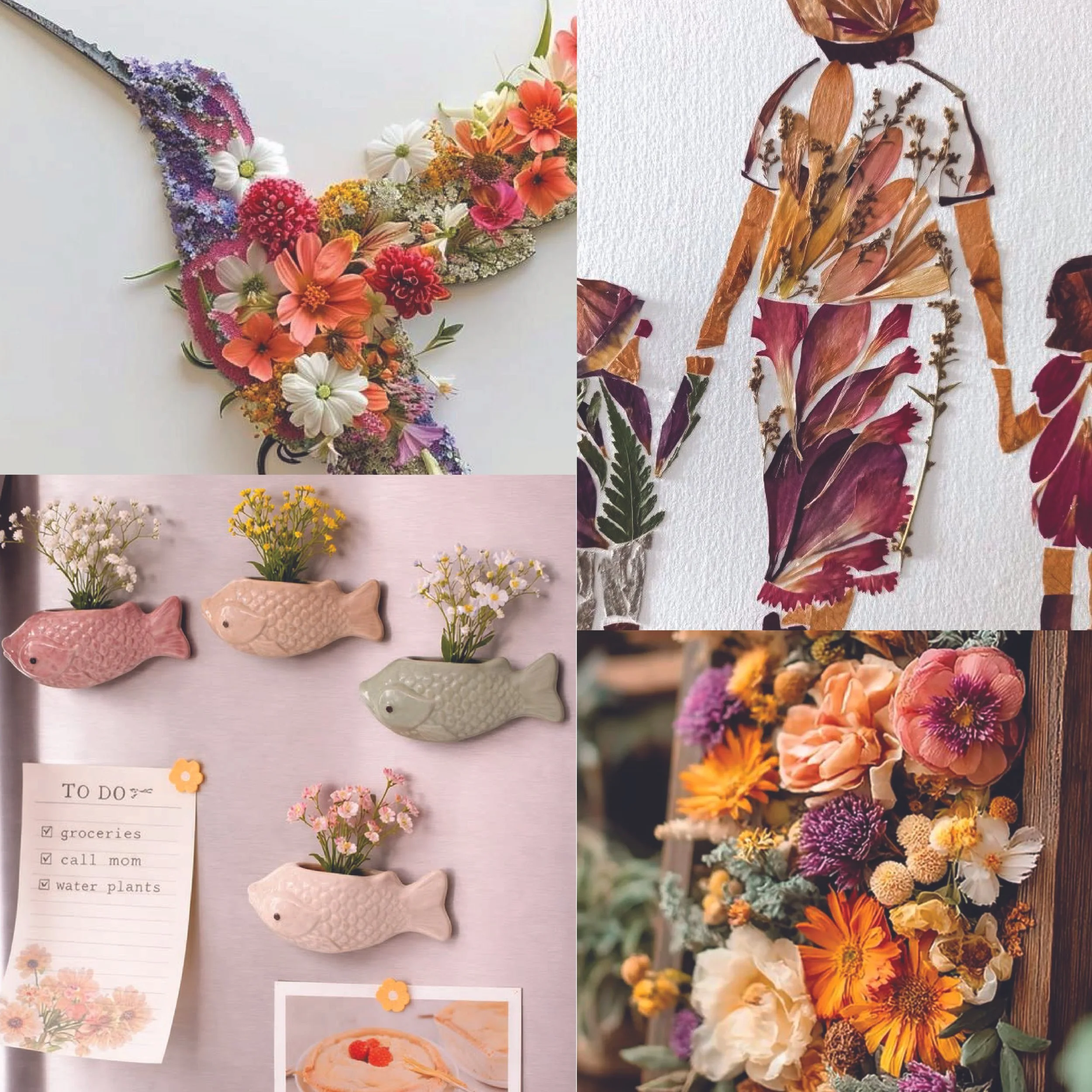
Pinterest Finds: Top Left: @carmenelena101 Bottom Left: @rustandcinder Top Right: @PetalTogether Bottom Right: @Heart1991Shape
Drying flowers doesn’t have to be complicated or equipment-heavy—sometimes the simplest methods are the most beautiful. Hanging flowers upside down is one of those timeless techniques that feels almost meditative, and it’s a perfect way to preserve a moment, a bouquet, or even just a handful of stems you picked up on a walk.
The process is refreshingly straightforward. Start by gathering your flowers into small bunches—keeping them loose enough so air can circulate between the stems. Tie them together with twine or a rubber band, then hang them upside down in a dry, dark, and well-ventilated space. A closet, attic, or even a quiet corner of a room works well as long as there’s minimal moisture and sunlight. Over the next couple of weeks, the flowers will slowly lose their moisture, their colors softening into muted, vintage tones.
There’s something quietly satisfying about checking on them as they dry. You start to notice the subtle shifts—the way petals curl slightly, or how the scent changes from fresh and floral to something more delicate and nostalgic. It turns the act of preserving flowers into its own kind of creative ritual.
What makes this method especially inspiring is how easily it connects to other creative projects. Once your flowers are dried, they become materials for something new. You might tuck them into a journal, use them in handmade cards, arrange them into a wall hanging, or incorporate them into candles or resin pieces. Even a simple bunch hung on a wall can become a piece of decor that tells a story.
Looking at what others have created can spark ideas you didn’t expect. A dried lavender bundle might inspire a calming workspace. Pressed petals could lead to experimenting with textures in art. A collection of different stems might evolve into a seasonal display. Each project builds on the last, turning a simple drying process into an ongoing source of inspiration.
In the end, hanging flowers upside down is more than just preservation—it’s a way to slow down, notice details, and let creativity grow naturally from something small.